Power of the Mind is all about understanding the amazing way the human mind works and how it influences our behaviours. How does language develop, how do we make decisions, how good is our memory, can we believe what we see and hear? These are just a few of the questions we looked at last year, plus we’ve recently dived into even more fascinating topics around sleep, reading, drawing, music, facial recognition, online behaviours, personality, loneliness and laughter. We do fun exercises and get involved in some great chats as we learn, laugh, live. You can take free courses if you want to pursue your interest further.
Dr Debbie Pope, a retired psychology lecturer, delivers and leads each session, along with invited guest lecturers. Everyone is very welcome!

If you are currently not part of the group and wish to receive regular update emails then please contact me using the form at the bottom of the page.
Free events and activities available outside the U3A
Open University free courses Please follow the link below and put psychology in the search engine (or whatever floats your boat!). For example, there is a good Forensic Psychology introductory course looking at interesting topics such as eyewitness testimony with some fun activities and videos. Other courses cover child psychology, animal minds, sports psychology, etc. Take a look as there is something for everyone – a really good, free resource.
https://www.open.edu/openlearn/free-courses/full-catalogue
The Power of the Mind. All Sessions to be held on Fridays in Withnell Fold Sports and Social Club from 1.30pm until 3.00pm.
Entry is £2 which can be paid in cash or by card. No need to book as there is plenty of room for all – just come along.
Dates for 2026 Sessions:
8th May – The Art (or Science) of Deception
In this session we look at Deception – what it is and why we do it? How the use of deception gives us an advantage. How can we tell if someone is lying? How do scammers online operate and how we can prevent being scammed by other.
5th June – The Mystery of Sleep
- What happens when we sleep?
- Why do we sleep and why is it so important?
- Sleep disorders – when sleep all goes wrong
NO SESSIONS IN JULY AND AUGUST
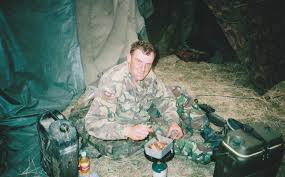
11th September – Guest Speaker: Danny Fort – The Voices of Veterans: The Transition from Military to Civilian Life. https://www.lancashire.ac.uk/postgraduate-research/student-profiles/daniel-fort
Danny’s is an army veteran and is currently studying for a PhD at UCLan, looking at the transition back into life after being in the forces, with an aim to address and reduce common veteran issues such as homelessness, addictions, incarcerations, and suicide.
NO SESSIONS IN JULY AND AUGUST
9th October, 6th November, 4th December – TBA
Past Sessions (can be repeated by request).
1. Language
- What is language and why it makes us so powerful?
- How do we learn the superpower of language so quickly – from birth to 3 years
- Aphasias – when language all goes wrong
2. Memory
- Why can you remember what happened years ago, but not yesterday?
- False memories and can your memory be changed?
- Amnesia – forgetting the past and future
3. Imagery and Problem Solving
- How mental images help us to solve problems and be creative.
- Why knowing too much can stop us from solving problems. Thinking outside the box.
- Aphantasia – a life without mental images
4. Decision Making
- Making good and bad decisions – biases and short cuts.
- How advertisers can trick us into buying their products.
- Why the news makes us think the world is scarier than it actually is
5. Emotions and Emotional Intelligence
- Why do we have emotions?
- When emotions become overwhelming – the advantages and disadvantages.
- What is emotional intelligence and do I have any?
6. Why raednig is mroe than jsut spllenig out the words. The psychology of reading
- How we teach children to read
- How do we really learn to read
- Difficulties of the English language
- What is dyslexia?
7. The Mystery of Sleep
- What happens when we sleep?
- Why do we sleep and why is it so important?
- Sleep disorders – when sleep all goes wrong
8. Drawing Development: Insight into the Mind of a Child
- Why do all children seem to go through the same stages when drawing people?
- Does a child’s drawing express more than simple representations of their world?
- Is a child’s use of colour important?
9. Why Music is Good for the Mind
- Why do we make and listen to music
- Why does some music get stuck in our heads?
- Music therapy
- Is music a language of its own
10. Personality
- What is personality?
- Completion of the Big five Personality Test
- The positives and negatives of using psychological tests
11. Studies that Shaped Social Psychology
- Consideration of ethics in psychological studies
- Stanley Milgram – conformity study
- Philip Zimbardo – Stanford Prison Study
- Jane Eliott – ‘Blue Eye, Brown Eye’ study
12. What’s so Funny? The Psychology of Laughter and Humour
- Why and when do we laugh?
- What purpose does laughter serve?
- Why are comedians funny?
- Can laughter keep us healthy?
13. When seeing (or hearing, touching, smelling and tasting) is not always believing
An exploration of illusions in relation to all five senses using a range of tasks to show how our brains often deceive us.
14. The Hunger Games. The psychology of hunger, eating and satiety
- An overview of the biological processes of digestion.
- …but why do we feel hungry?
- The influence of psychological factors on eating behaviour.
- Are parents to blame if their children are obese?
This session is not focusing specifically on eating disorders, but if you wish to read more there is a good general article in Psychology Today: https://www.psychologytoday.com/gb/conditions/eating-disorders
15. What I want to do, isn’t always what I do. The influence of groups and group processes
- A definition of groups and their benefits.
- Do we behave differently when on our own on in a group and, if so, why?
- The benefits and problems of Groupthink
- Social issues involving groups e.g. the influence of groups in the recent riots.
This session is not focusing specifically on rioting or crowd behaviours, but if you wish to read more there is a good general article from the British Psychological Society magazine, The Psychologist: https://www.bps.org.uk/psychologist/hush-now-dont-explain-perverse-commentary-2024-riots.
A more in depth view of the processes underlying the spread of rioting (focusing on 2011 riots) can be found in the link to an interesting research article below: https://researchonline.gcu.ac.uk/ws/files/44341665/Drury_J._et_al_2020_A_social_identity_model_of_riot_diffusion_from_injustice_to_empowerment_in_the_2011_London_riots.pdf
16. Attention matters! The psychology of attention and its importance in everyday life
- What is attention and basic attentional processes.
- The importance of being able to focus and search.
- Why we sometimes don’t notice the obvious!
- Attention Deficit Disorder.
17. Designing a study in psychology. The processes and the pitfalls
- How to ‘do’ research – involves a group exercise to show how to design a study.
- Different methods available to psychologists with short films and examples.
- Can you trust research findings?
18. Animal Psychology. Can you have a conversation with a chimp? Does your dog sense your emotions?
- How have animals helped psychology (rats, cats, gorillas and others…).
- Dogs and their ‘special abilities’
- The ethics of using animals in research.
Links to some interesting You Tube films (the first two are not shown during the session):
A good short film (17 minutes) that considers dogs and their use in testing for cancer, etc. https://www.youtube.com/watch?v=gx2l5cu5NmM
How Jane Goodall Changed the Study of Animal Behaviour: https://www.pbslearningmedia.org/resource/nat16.sci.lisci.goodall/how-jane-goodall-changed-the-study-of-animal-behavior/
The following clips are shown during the session so please don’t watch before the session.
Dogs and Emotions (3’29”): https://youtu.be/eK7wp2xWOo4?feature=shared
Koko the Gorilla (7’34”): https://youtu.be/FqJf1mB5PjQ
Washoe the Chimp (6’06”) : https://www.youtube.com/watch?v=OUwOvF7TqgA
US Navy Dolphins in Training (6’10”): https://youtu.be/2AitYAaguto?feature=shared
Link to scientific paper – Dogs functionally respond to and use emotional information from human expressions: https://www.cambridge.org/core/journals/evolutionary-human-sciences/article/dogs-functionally-respond-to-and-use-emotional-information-from-human-expressions/BFA8227B714FFA69F4BC439D9B8E1337
Link to scientific paper – Dogs and the Good Life: A Cross-Sectional Study of the Association Between the Dog–Owner Relationship and Owner Mental Wellbeing: https://www.frontiersin.org/journals/psychology/articles/10.3389/fpsyg.2022.903647/full
Link to The Mind of an Octopus – an interesting article from the Scientific American: https://www.scientificamerican.com/article/the-mind-of-an-octopus/
19. Messing around with genetics. The greatest human discovery or a road to disaster?
- Discovering the secrets of life – from Charles Darwin to Dolly the Sheep and beyond…
- Why knowledge may be a dangerous thing – cloning and designer babies
- Do you really want to know your future?
Interesting You Tube clip related to study with identical twins (8 minutes long): “We Were Just Lab Rats to Them” – The Heartbreaking Case of ‘Three Identical Strangers’. https://www.youtube.com/watch?v=doY5f4wrNZo
20. Morality and Helping Others
- How do we know right from wrong (and it’s not as simple as you might think!)
- How do we justify/live with moral dilemmas?
- At what age does a sense of moral sense develop?
Barnardo’s Report: From Playground to Prison: The case for reviewing the age of responsibility. https://www.iprt.ie/site/assets/files/6205/barnardos_from_playground_to_prison.pdf
Review Article (2022) (a bit heavy!). Origin and Development of Moral Sense: A Systematic Review. https://www.frontiersin.org/journals/psychology/articles/10.3389/fpsyg.2022.887537/full
BBC Horizon. Are you born good or evil? (3 minutes, 18 seconds). https://www.youtube.com/watch?v=W72vC48kWyo
21. Neurodiversity – do we really need so many labels?
- What is neurodiversity?
- Do we need labels?
- Lots of debate (hopefully!) in the field of educational psychology
22. Sex, gender and gender differences
This session considered the differences between biological sex and gender from a psychological viewpoint, considering differences between males and females (are there any and, if so, what are they and why). Hopefully, this session helped to understand the gender confusions that arise along with current definitions and misunderstandings.
23. Power, influence and cults.
This session will look at the concept of power and the different types of power that exist. Do certain individuals seek out power? Does power change people? What are cults, what do they involve and why do they exist?
24. How our brains help us to navigate a complicated world
This session considers the importance of depth perception and how we need this skill to be able to move around our world. How do artists make flat paintings appear 3-dimensional? Lots of examples of how our brain makes assumptions that are often wrong (illusions). Also looking at young children – are we born knowing that we don’t walk off cliffs or do we have to learn.
25. A psychological overview of autistic spectrum disorder
This sessions considers autism – its history and current understanding. It will help to see the perspective of those with ASD and the various theories that help to explain why the brains of autistic individuals are different.
Past Guest Speakers that have already taken place
- Professor Linda Kaye, Edge Hill University. ‘Understanding how online worlds affect our everyday experiences and behaviour’

Professor Linda K. Kaye is Associate Head of Psychology at Edge Hill University. She specialises in cyberpsychology, in which she broadly seeks to understand how online worlds affect our everyday experiences and behaviour, and the extent to which we can understand human psychology from studying people’s online behaviour. Her overarching research aims are to explore how online settings may promote social inclusion and well-being. Within this, she addresses core theoretical questions such as “how social is social media?” and “are emoji emotional?” but also works in applied areas such as understanding the effectiveness of online communication and online consumer marketing. A cross-cutting theme of all her research relates to identity and inclusion, and how we can ensure we are supporting an inclusive society via online environments.
Here are the links which Linda signposted at the end of her talk, in case anyone is especially keen to read more on the implications of online behaviour for digital legacy (first link) and the possibilities of cyberpsychometrics in recruitment (second link):
2. Professor Pamela Qualter, University of Manchester. The Psychology of Loneliness

https://research.manchester.ac.uk/en/persons/pamela.qualter
Professor Pamela Qualter is the UK’s leading scientific expert on child and adolescent loneliness. She works with the UK Government’s Tackling Loneliness Team, recently being commissioned by them to write an evidence gap report on loneliness. Previously, Pamela led the BBC Loneliness Experiment, then the world’s largest study of loneliness. Here are a few interesting links to Pamela’s work;
https://www.bps.org.uk/psychologist/all-mind-shines-light-loneliness
https://www.seed.manchester.ac.uk/education/research/impact/bbc-loneliness-experiment/
https://www.facebook.com/watch/?v=708654813710736
https://www.youtube.com/watch?v=hC8eMjcbPG0
3. Dr Sarita Robinson – Survival Psychology

Dr Sarita Robinson (aka Dr Survival®) has spent the last 20 years researching how people respond to life-threatening situations. Using a psychobiological approach, Sarita has explored human behaviour in relation to preparedness, cognitive and physiological responses during stressful events, and recovery from trauma. https://www.uclan.ac.uk/academics/sarita-robinson
Sarita on This Morning (27.05.24) (forward to 5 minutes and 25 seconds into this clip) – https://www.youtube.com/watch?v=NRqAOK_bgxc
4. Dr Jolyon (Jody) Faro – Judgement and decision making in situations of uncertainty and high-stress, Firearms Operations, major incidents and initial police training.
Jody retired from Cambridgeshire Constabulary in February 2018 having completed 30 years’ service. During his career, his experience included both operational experience and delivery of the key training requirements relating to major operations and firearms training and firearms command training.